 By Aaron Luz · 25 years in tourism · Last reviewed October 2026
Cobbled colonial streets, then a jungle island with no cars at all — the slowest, most romantic stretch of coast near Rio.
By Aaron Luz · 25 years in tourism · Last reviewed October 2026
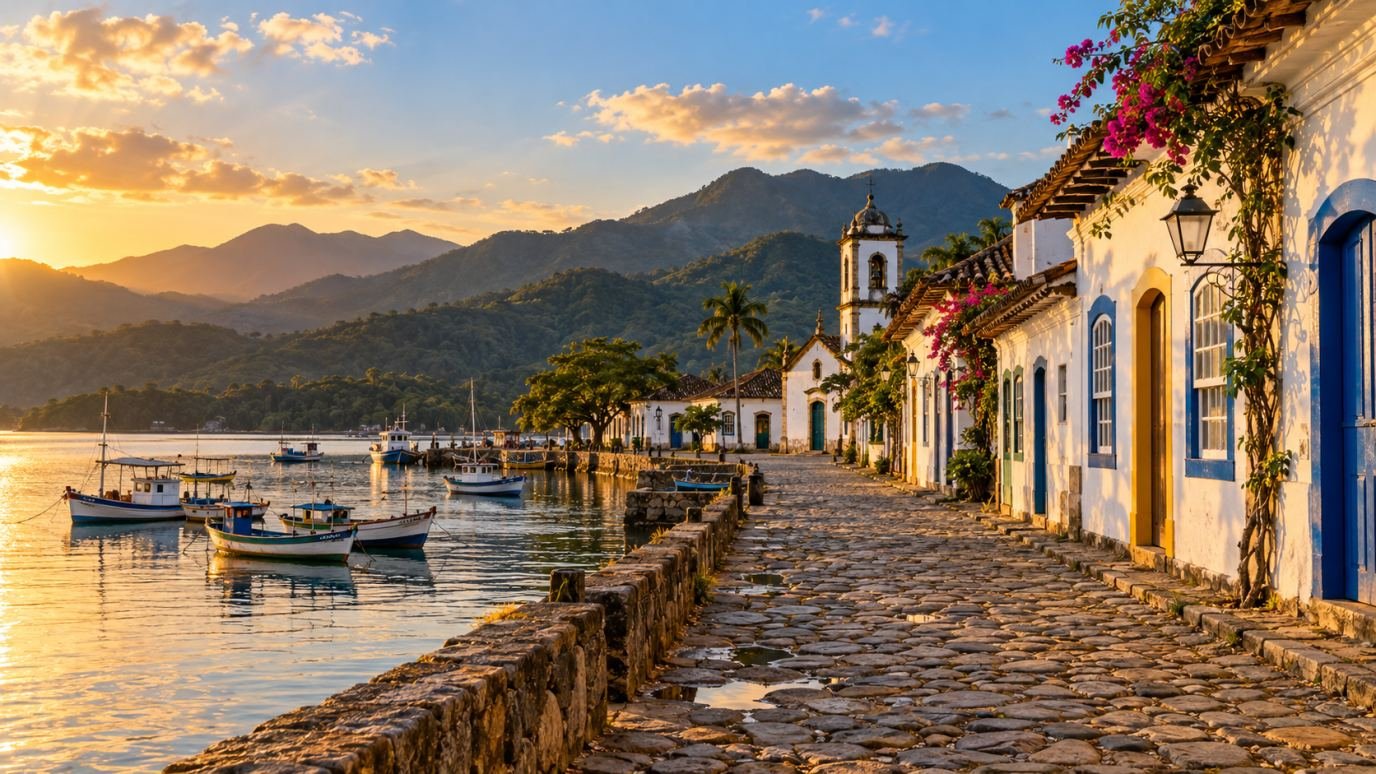
Late April to mid-October is the dry window — fewer crowds, cooler evenings, and the historic centre at its most atmospheric after dark, when gas lanterns light up the cobblestones. May brings the Bourbon music festival, one of the best times to visit if you don't mind the extra company. This is a 3-4 day add-on, not a rushed day trip — give the island at least one full night.
Paraty's historic centre is a UNESCO World Heritage Site, inscribed in 2019 — colonial houses, baroque churches, and cobblestones laid specifically so the tide would wash the streets clean. No cars are allowed inside it; everything is walkable. From there, a short ferry or boat ride takes you to Ilha Grande, a genuinely large island where cars have never been allowed at all — only trails, beaches, and boat transfers between them.
Ilha Grande's near-total lack of development isn't an accident — for most of the 20th century, a large part of the island was off-limits as the site of one of Brazil's most notorious prisons, demolished in 1994. That history is exactly why the island stayed wild: decades without hotels or roads left behind what's now considered one of Brazil's best-preserved stretches of Atlantic rainforest, and Lopes Mendes, regularly ranked among the most beautiful beaches in the country.
Boutique pousadas inside the colonial walls — walk everywhere, and you're a short transfer from the Ilha Grande ferry.
The island's only real village — simple pousadas, no cars, and direct boat access to the best beaches.
A laid-back beach village just outside Paraty, popular with those who want fewer crowds and more surf.
No — and you genuinely can't use one in either historic Paraty or on Ilha Grande, since both are pedestrian-only by design. You'll want transport between Rio/São Paulo and Paraty (bus, transfer, or rental car for the 4-hour drive), but once you arrive, everything is on foot, by boat, or by golf-cart taxi. This is one of the easiest regions in Brazil to navigate without ever worrying about driving.
— Aaron
Compare real prices now, or let me build the whole plan around your dates and your worries.
New guides and plain-English advice for your first trip. No spam, unsubscribe any time.